

RCSA Academic Symposium
Papers and Presenters
Join us for this year’s RCSA Academic Symposium on Friday, March 13th! Throughout the day, there will be four 90-minute sessions that will each bring three papers into an interdisciplinary conversation. We have a great lineup of papers in store. Topics include: Unity and Hospitality; Mercy, Despair and Christ’s Solidarity in Suffering; Bodies and Embodiment; and Knowing and Experiencing God.
Both in-person and online students are welcome to attend!
For in-person attendees, coffee and refreshments will be provided starting at 8:30am, and soup will be provided for lunch. Small donations for lunch are welcome but not required.
For online attendees, here are the Zoom links to the event:
Morning Sessions: https://zoom.us/j/99751039710?pwd=hvv9rvcky3TJ4WZgQiaCKGYUSJNpsT.1
Meeting ID: 997 5103 9710
Passcode: 324689
Afternoon Sessions: https://zoom.us/j/97933564040?pwd=dFXTCzkY8fd5brKWA3DauhdTgY1HgF.1
Meeting ID: 979 3356 4040
Passcode: 715324
The Symposium seeks to represent a diversity of interests, disciplines, and perspectives and to bring our community together in conversation over the ideas being generated by our students. Come be a part of the Christian interdisciplinary conversation that nourishes our community!
Please find the list of the students presenting with an abstract on their papers below:
PAPERS & PRESENTERS

Christy Wilson
Christy Wilson has a BA in Communication from Western Washington University and has nearly completed her MATS at Regent College. She has spent twelve years working in the church, all while raising four children with her husband Nathaniel. Christy lives in Bellingham, WA where she is currently doing a chaplaincy internship at her local hospital. Her lifelong goal is to promote and facilitate conversations around the important questions in life, and to help others know God, both in their experience of Him and their thinking on Him.
“Knowing and Unknowing: How the Epistemological Insights of John Macmurray Can inform the Theological Pursuit of Knowing God”
How do we know and understand God? Can philosophical insights guide the study of God? Within the field of philosophy, John Macmurray pushed back against the empiricist modern tradition, arguing that understanding happens primarily in active relationship rather than in isolated thought. His insights can assist theological study which, post-Enlightenment, has also, at times, prioritized thinking on God over activity with God. However, Christian thinkers have historically recognized that philosophical advances can only take us so far. The thinking self cannot reach the Divine and ultimately life with God must include surrender to the mystery of God.

Dimo Ayoub
Dimo likes cats, books, and tattoos. His hobbies include playing with his cat. His favourite thing to do is drink black tea and read books. Dimo does not have a favourite book (or movie, or song) although he really enjoys the writings of the Brontë sisters. Dimo is finishing up his ThM at Regent this semester. Dimo also works at the Regent College Bookstore which has been his favourite job, by far. Dimo has many hopes and dreams for the future. You can follow Dimo around the halls or on instagram at @dimothenemo
On the Body of God
The Bible unapologetically uses the human body—limbs, organs, and all—to speak of and imagine God. But somewhere along the way, well-intentioned readers have dismissed such language as merely anthropomorphic. Today, most Christians concede to God a “body” only in the mystery of the incarnation. But what if material existence belongs to the Godhead prior to the incarnation? What if it befits the Father as well as the Son? And what if Scripture’s physical descriptions of God were not intended as figurative concessions to human limitation? Might there be a reasonable case for reading these texts as pointing to something more literal and profound?
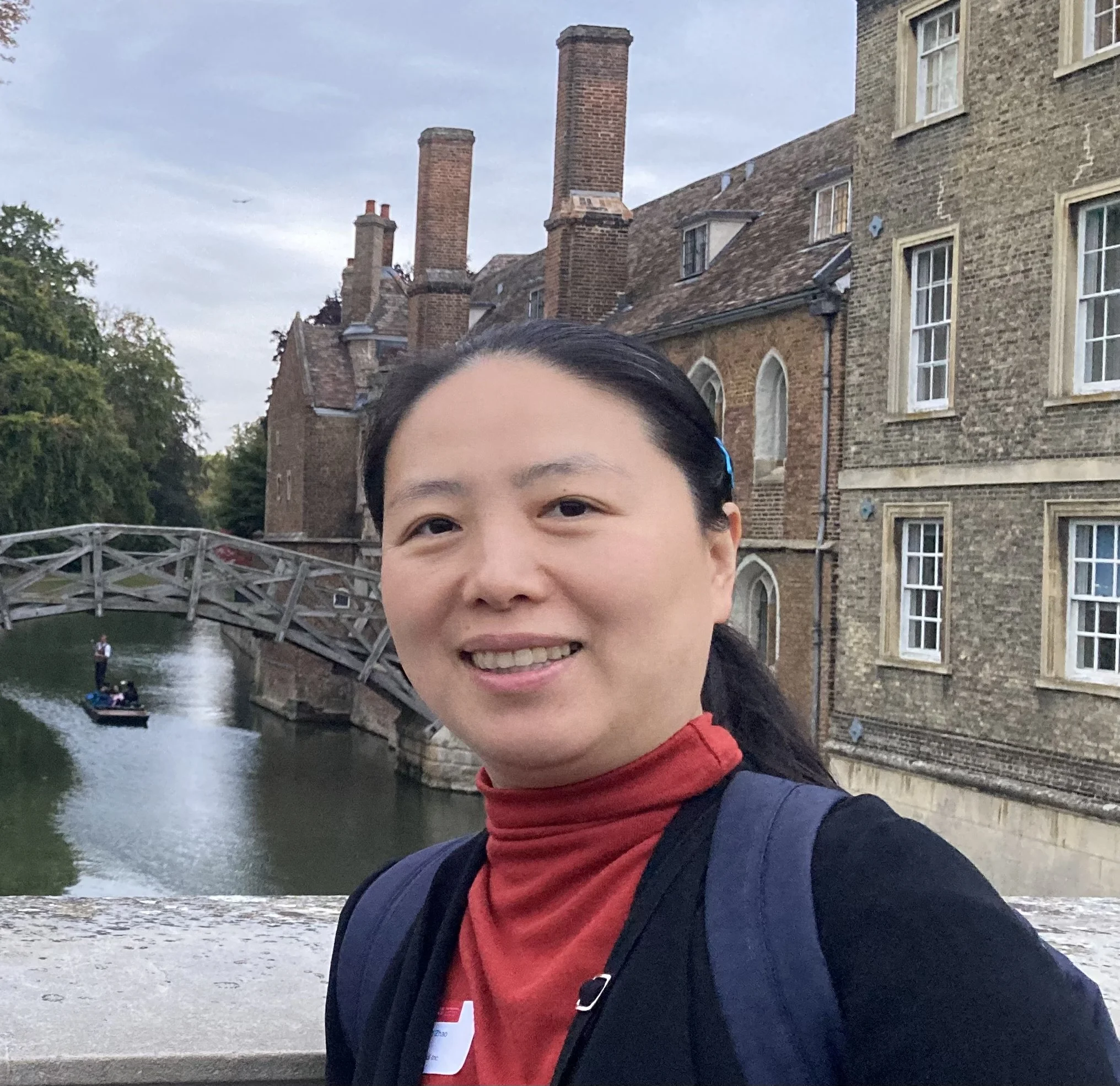
Elena (Yanting)
Zhao
Elena (Yanting) Zhao is a Diploma student at Regent. A graduate of Nanjing University (BA in Chinese Literature) and the University of Victoria (MEd), she came to Regent to deepen her theological foundations, ensuring her literary “beer” is brewed not too thin. Her journey spans teaching Chinese Literature at a public secondary school in China and co-founding an education venture to her current work at Vancouver School Board and Carey Theological College. As a Sunday school teacher, mother of two, and wife of an Anglican Mandarin priest, she explores the competition of formation between Christianity and the secular age.
Recognizing Union as a Theological Root in an Age of Fragmentation
This paper demonstrates that “Union with God” is a lived reality sustained through ecclesial formation, rooted in Scripture and the Early Church. Addressing modern fragmentation, I propose an interpretive framework focusing on the formative processes that bridge faith and practice. Drawing on Chinese wisdom, this study critiques the Western tendency to bifurcate “thinking” and “doing,” outlining a vision where theological reflection and lived existence are profoundly integrated. This synthesis moves beyond abstract constructs toward a holistic understanding of spiritual formation and academic contribution.
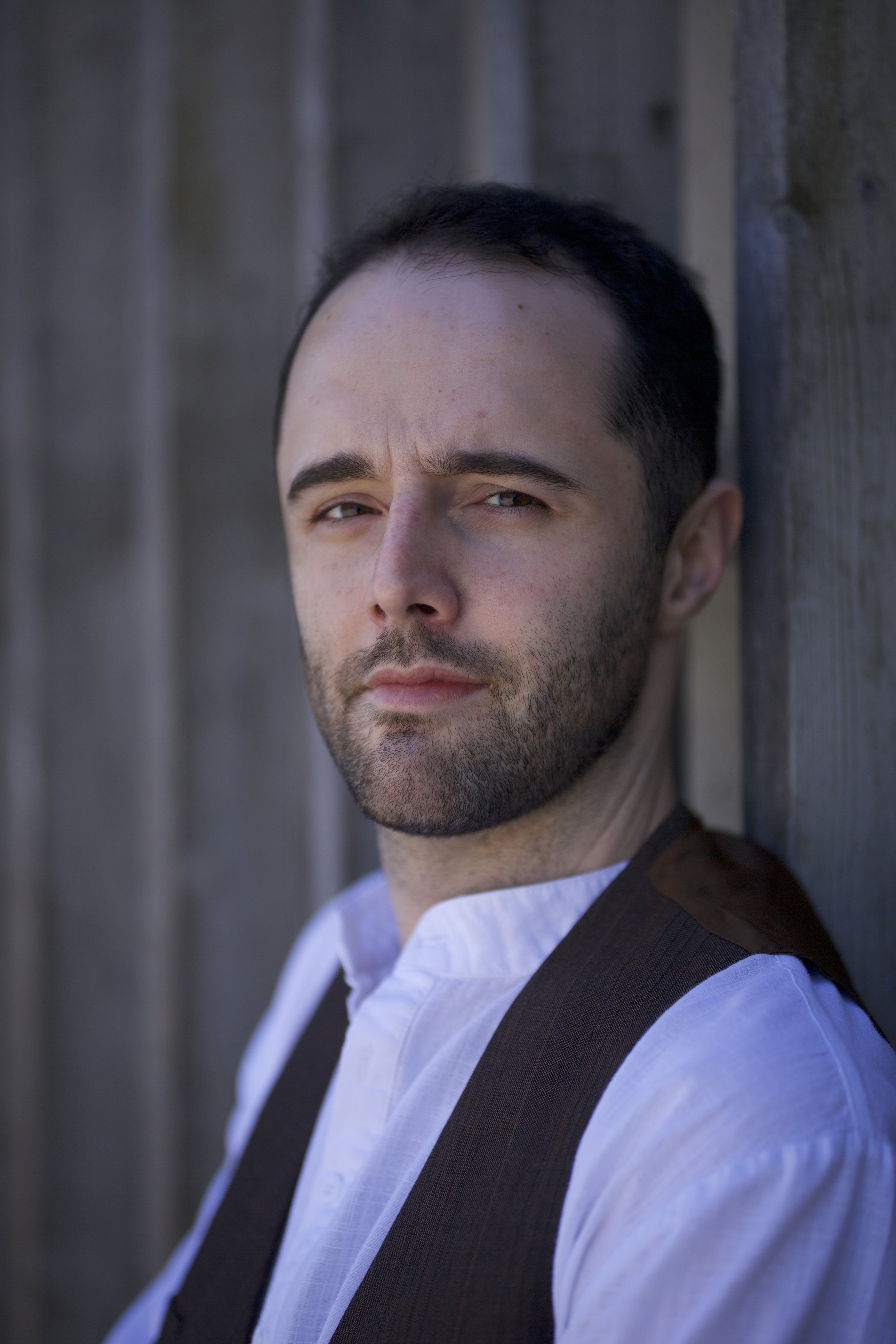
Elliot Spilsbury
Elliot Spilsbury is a MATS student (Christianity & the Arts) in his final year of study at Regent College. He completed a BA in philosophy at UBC and is a songwriter and musician. At Regent, Elliot is integrating his academic and artistic practices by pursuing an IPIAT. His current research focuses on intersections between the singer/songwriter’s vocation and Romantic Idealist theology. As part of his IPIAT, Elliot has created an album of original songs, to be released this year. He also works as a TA for Dr. Prabo Mihindukulasuriya in Regent’s History and World Christianity departments, leading tutorials and assisting with administration.
‘The Man in Concrete Wall’: A Meeting of Heaven and Earth in Edward Hopper’s Office in a Small City
As America’s most renowned realist painter, Edward Hopper is regularly interpreted as depicting modern loneliness and societal alienation. But could Hopper’s expressions of melancholy solitude carry an intense, latent spirituality, as some have suggested? This paper analyzes Hopper’s 1953 painting Office in a Small City, arguing that it may be understood as portraying a meeting of earth and heaven in the life of a mid-century American office worker. Drawing upon John Taggart’s Kierkegaardian analysis of Hopper’s work and Hopper’s own affinity with Emersonian Transcendentalism, it will be argued that the painting’s light presents its central figure with a heavenly offer of self-actualization.

Jean Pierre
Nikuze
Jean Pierre Nikuze is a Rwandan storyteller currently pursuing a Master of Arts in Theological Studies (MATS) at Regent College, with a concentration in World Christianity. He also serves as a youth pastor at Faith Church, in east Vancouver. His short story, ‘The Goat,’ was shortlisted for the Commonwealth Short Story Prize in 2024, and in the same year he received the Luci Shaw Prize for Creative Writing. Nikuze is married, and he and his wife have two young children.
Subversive Mercy: Reading Matthew 5:7 Through the Lens of African Post-Conflict Spirituality
This paper reexamines mercy in Matthew 5:7 through African post-conflict spirituality. While theologians such as Glen Stassen define mercy as generous action toward those in need, the study retrieves traditional interpretations of the Beatitude that emphasize God’s “prior mercy” as the source of human mercy. Drawing on narratives from Emmanuel Katongole and other post-conflict voices, it offers a more robust view relevant to contexts such as Rwanda and Burundi. There, mercy becomes a costly, subversive refusal of hatred and revenge, as oppressed believers forgive perpetrators. This mercy pursues interethnic, interracial, and interfaith harmony and embodies eschatological hope.

Jegan Ganesan
Jegan is in the MATS program with a concentration in Doctrinal Theology. Before reading books for class at Regent, Jegan was reading sheet music for his undergraduate degree in flute performance at UBC. Apart from his academic pursuits, Jegan is also passionate about the church and serving in worship ministry, often serving as a guest musician at other churches or events. After music went from music to vocation, Jegan found a new love in what he calls “happy juice”— coffee. His favourite coffeeshop, Barrio Coffee, is found in the lobby of Avant Life Church.
Reacquainting with the Cosmic Christ: Principles of Worship from Maximos to the Worship Leader
For many contemporary worship leaders, the integration of technology has been a contentious topic in recent years. While the landscape has shifted since the time of Maximos the Confessor, the goal remains the same: union with Christ or, as he puts it, deification. As such, this paper addresses key ideas in Maximian theology, including the Cosmic Christ, the nature of creatures, deification, and ascension through the liturgy. It seeks to offer reflections on the process of “ascension” for the worship leader as it pertains to livestreaming, drawing on Maximos’ treatment of the Transfiguration in Ambiguum 10.

Kathleen Behrend
Kathleen is a vocational craftswoman; words, fabric, paint, food, beads, wood – if she can make something from it, she will. She is a trained fashion designer and continues to expand her skills through sewing costumes for films and making bespoke wedding dresses – as well as crafting her own clothing. Kathleen is a voracious reader and a committed Tolkien geek. She has also published a book on singleness (Seeking Solo). A lifelong apprentice of Christ, she believes the Way of Jesus is the best way to be human and is passionate about faithful biblical application.
Fashion Outward
Fashion is a mode of dress in a place and time; it is also an opportunity for individual expression. When we dress ourselves, are we expressing an internal personality abstracted from our bodies or is this a holdover from Platonic ideals? Engaging with the work of fashion designer and theorist Fiona Dieffenbacher, I propose a continuum of aesthetic honesty before arguing for a biblical synthesis of an embodied-soul. A biblical anthropology allows for freedom in fashion. Studying outliers can begin to shape the conversation around boundaries for dressing as Christ-followers.

Rachel Hanna
Rachel Hanna is a MATS student and Podcast Producer at Regent College. She earned a PhD in sociolinguistics from Queen’s University Belfast in 2019. Her research explores constructive approaches to theology and spirituality from a trauma-informed, feminist perspective. Originally from Northern Ireland, the legacy of the Troubles has raised ongoing questions about how cultural and intergenerational trauma influence public theology and form religious identity. Her experiences of chronic illnesses and caregiving responsibilities have also shaped her theological imagination. Beyond research and having wide-ranging conversations with Claire Perini and friends, she enjoys sea swimming, the outdoors, writing poetry, and singing.
The Pit and the Dell: Reassessing Sin, Wrath and Female Embodiment in Ancrene Wisse and Showings
This paper compares the medieval guide for anchoresses, Ancrene Wisse, with the visionary theology of Julian of Norwich, focusing on close readings of two contrasting “pit” narratives: the pit of sexual temptation in Ancrene Wisse, and the “dell” of perceived separation from God in Julian’s Showings. While the Ancrene Wisse reveals a fear-based theology, concerned with policing women’s bodies as sources of sin, Julian articulates a compassionate vision of God as both Father and Mother. It also makes contemporary connections to evangelical purity culture and its implications for women’s embodiment, and spiritual trauma derived from authoritarian views of God.

Sara Apostoaei
Sara Apostoaei is a third year student at Regent College pursuing a concentration in doctrinal theology. Her academic interests are wide-ranging but she is especially drawn to close engagement with scripture – particularly the Old Testament – and to tracing how theological questions take shape within the biblical text. Her research often gravitates toward weighty themes like sin, atonement, and hell, though she hopes to one day write about something more cheerful. She is passionate about bridging biblical studies and theology in ways that serve both the academy and the life of the church. Outside her studies she enjoys music, matcha, thrifting and unhurried conversations with friends.
Hell Received a Body: Christ’s Descent and Divine Solidarity in Hans Urs von Balthasar
The doctrine of Christ’s descent into hell has often remained marginal in modern evangelical theology, yet recent theological retrieval has renewed interest in its significance. This paper traces the development of the doctrine across creedal, patristic, medieval and reformation traditions before turning to Hans Urs von Balthasar’s reinterpretation. Balthasar’s offers a synthetic and innovative account that draws together Catholic, Orthodox and Reformation perspectives while pressing them in new directions. He presents the descent as an ontological and experiential participation in God-forsakenness on behalf of humanity. This account raises important theological questions about the salvation, final judgement, the Trinity and the scope of the cross and resurrection, while highlighting the doctrine’s pastoral significance for those suffering.

Stephanie Loli
Silva
Stephanie Loli is a Brazilian Master of Theological Studies (MATS) student with an emphasis in World Christianity. She holds a bachelor’s degree in International Relations from São Paulo State University and completed additional coursework in Political Science at the University of Santiago de Compostela, Spain. Her professional background includes experience in product development and campus ministry with IFES Brazil. She currently works in refugee protection in East Vancouver.
Sent Together: A Theological Vision of Multicultural Churches
Every Sunday, in cosmopolitan cities across the globe, many church communities embody a striking reality: people from diverse nations, languages, histories, and cultures gather as one body before God. If the Church is called to participate in God’s mission in the world, then multiculturality cannot be dismissed as merely a result of globalization. This paper articulates a theological vision of multicultural churches grounded in Scripture—from Abraham’s promise to the nations to the Spirit’s outpouring at Pentecost. Framed within the Missio Dei, it argues that such communities serve as sites of spiritual and human formation, offering a foretaste of the eschatological kingdom in which unity in diversity is received as a gift and a calling.
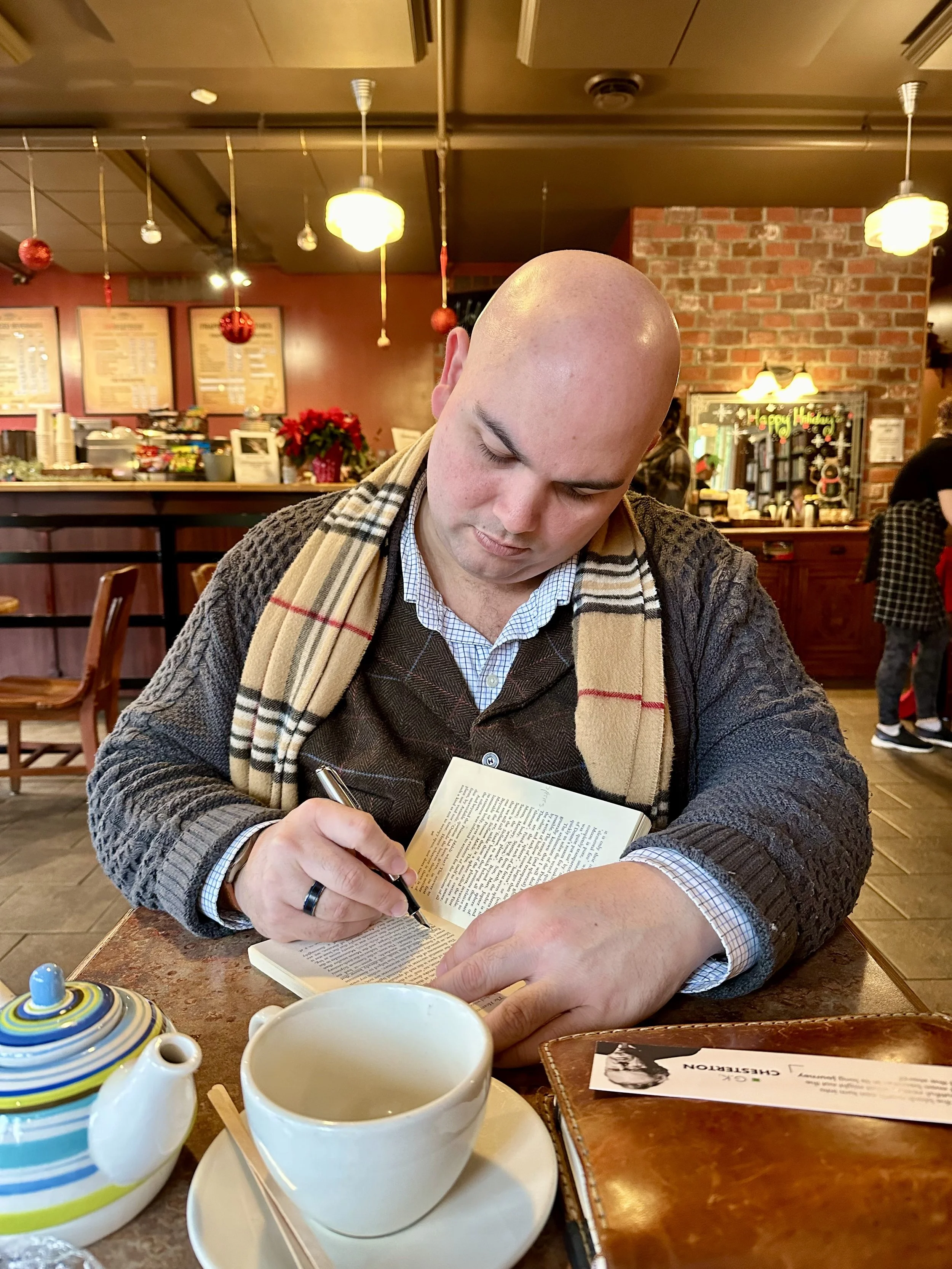
Steven Gomez
Steven Gomez is an MDiv student, with a MATS in Christianity and the Arts already under his belt. His desire to be a fiction writer has led him to explore the role of the artist in the Church and the world, with a growing interest in the sacramental potential of stories to reorient our imagination towards the Triune God. He lives in Maple Ridge, BC with his wife and their cat, writes occasional poetry, and is in training for ordained Anglican ministry.
The Lion, the Lord, and the Fairy Tale: Divine Participation and the Iconography of Aslan
It is my contention in this paper that there is a sub-sacramental or iconographic aspect to the character of Aslan created by C.S. Lewis. To put it a little less boldly, that by encountering the Lion in The Chronicles of Narnia, readers can be brought to encounter Christ. I believe that something of a theological foundation for this claim may be found in Richard Hooker’s theology of participation, and in similar strains of thought among the other Inklings. Ultimately, I argue, we can at least say that we have in Aslan a gift given to the Western church through C.S. Lewis’ theological imagination formed and shaped by the Anglican tradition.

Zella Christenson
Zella Christenson will graduate this May with an MATS in Biblical Studies. With a background in Food Studies from her undergraduate degree at New York University, Zella has sought opportunities to explore themes of food security, creation care, and hospitality through biblical and theological lenses during her time at Regent. After she graduates in May, she is excited to move to Texas to marry her fiancé, Rene, and for the two of them to discern next steps together.
Inhabiting God’s Hospitality: A Theological Analysis of the Festival of Sukkot in the Pentateuch
Are you familiar with the Festival of Sukkot (also known as the Festival of Tabernacles or Booths)? Many Protestants are not. This paper develops a theological analysis of the Festival of Sukkot to argue that this festival rehearses a story of Divine Hospitality wherein people ritually come to know their place as guests within God’s creation, cared for generously and abundantly by YHWH, their host. As this ritual draws participants into the story of YHWH’s hospitality, the people of God, in turn, are being formed into a community of hospitality and learning to reflect God’s generous character to one another.
QUESTIONS?